Accessories are the cheapest improvement available to a sauna owner and the easiest place to overspend on things that do nothing. The useful ones fall into two groups: items that make sitting more comfortable, and items that keep the cabin clean. This guide covers both, and flags the fit checks that decide whether any of them work in your cabin.
Comfort: backrests, cushions and headrests
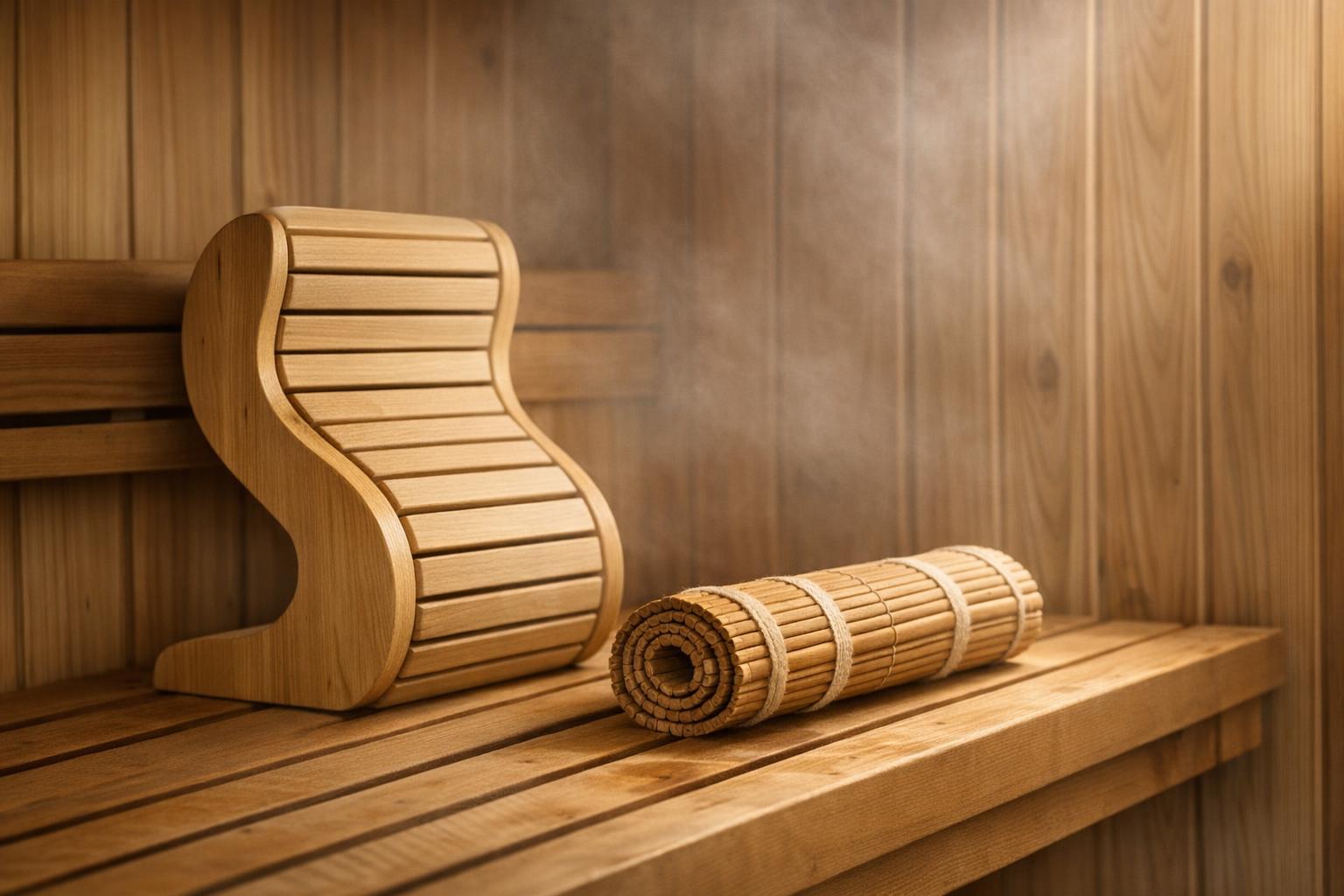
A flat wooden bench against a flat wooden wall is a poor chair. A contoured backrest is the accessory owners notice immediately, and it is the reason a session ends when the owner decides rather than when their back does.
The measurement that matters is bench depth and the height from bench to the point where your shoulders meet the wall. Backrests are sold in fixed widths; a rest wider than your bench section will not sit flat. Slatted wooden rests suit cabins; foam and fabric cushions suit fabric portables where the seat is a chair.
- Contoured backrests — the highest-impact comfort item in a wood cabin.
- Headrests — useful on taller benches, redundant on short ones.
- Seat cushions — mostly for fabric units with a folding chair.
- Footrests or slatted floor mats — keep feet off a cold or dusty floor.
Cleanliness: mats, covers and towels
Everything that keeps skin off bare wood extends the life of the bench. A bench towel or a fitted cover is the whole strategy, and it removes most of the cleaning routine before it starts.
Floor mats do the same job for the floor and add grip. Look for materials rated for the temperature the cabin operates at — typical infrared cabins run well below traditional sauna temperatures, but a mat intended for a bathroom is still the wrong product.
Buy two of whatever textile you choose. One in the cabin and one in the wash is the arrangement that survives contact with actual use.
Measurement and timing: hygrometers, thermometers, timers
Most cabins have a built-in temperature readout on the control panel, and many owners add an analogue thermometer-hygrometer pair because they are inexpensive and easy to read from the bench. In a dry infrared cabin the humidity figure mostly tells you the room is dry — it is a pleasant instrument rather than a necessary one.
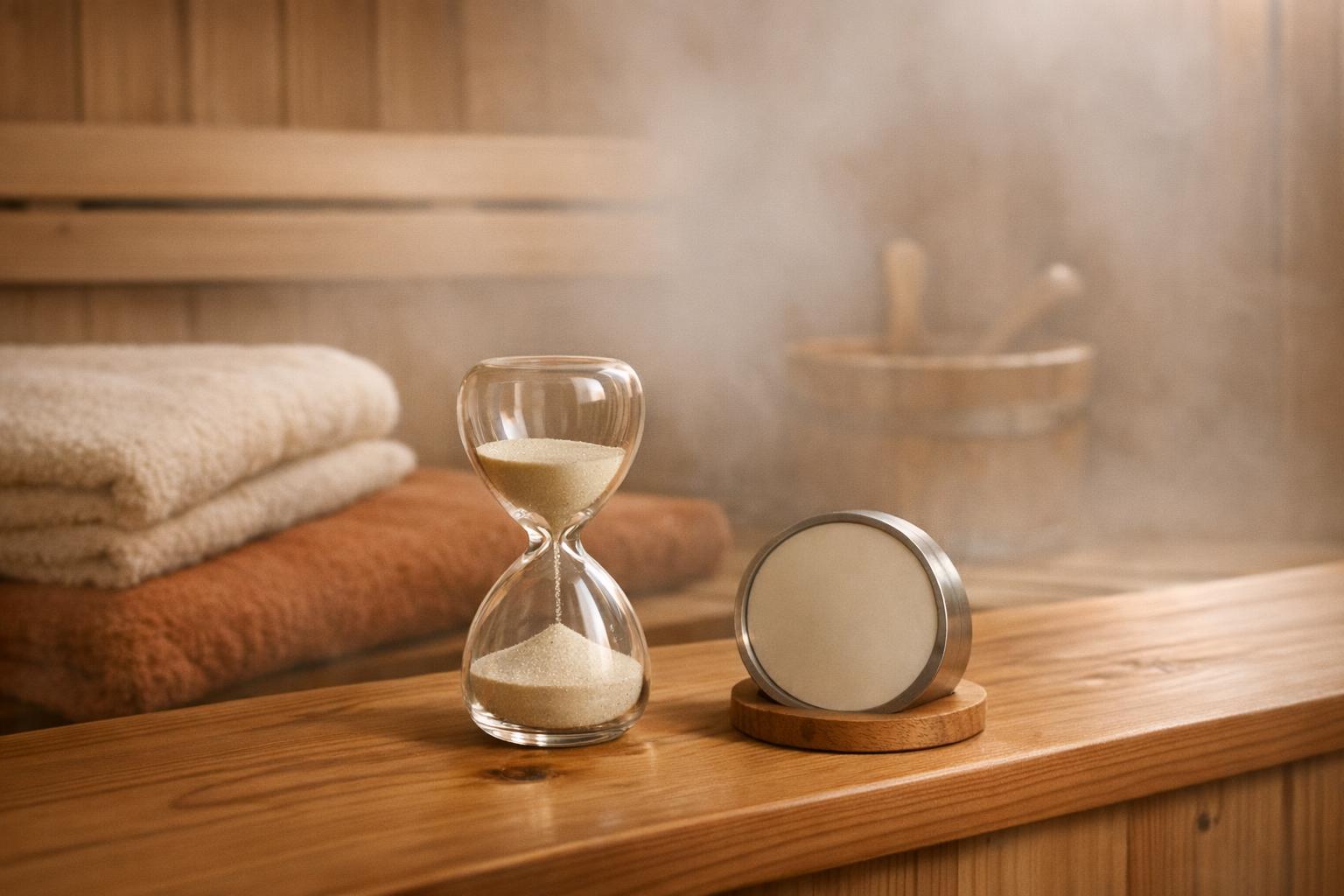
A timer is the accessory worth taking seriously. Cabin controls include one, but a simple visible countdown that does not require you to lean forward and squint at a panel makes it easier to keep sessions to the length you intended. The first sessions guide covers why that matters for comfort.
Fit checks before you order anything
Accessories are the category where returns happen, almost always because of dimensions. Measure before ordering, and ignore the photograph — accessory listings show a generic cabin, not yours.
- Bench depth and width, section by section if your bench is split.
- Seat-to-wall height for a backrest.
- Floor dimensions between panel edges for a mat.
- Whether the cabin has hooks, or whether a hanging item needs a different solution.
- The stated material and temperature rating on the accessory listing itself.
The accessories collection lists what we have catalogued; the same documentation caveats apply there as everywhere else, and the methodology explains how those listings are rated.
What we would skip
Not every accessory sold alongside a sauna earns its shelf space, and a few are solutions to problems these cabins do not have.
Aromatherapy add-ons designed for traditional steam saunas assume water on hot rocks, which is not how an infrared cabin works. Some owners use a dedicated diffuser instead, which is a preference rather than an upgrade — and anything that puts oil onto bare wood is a maintenance problem, not a feature.
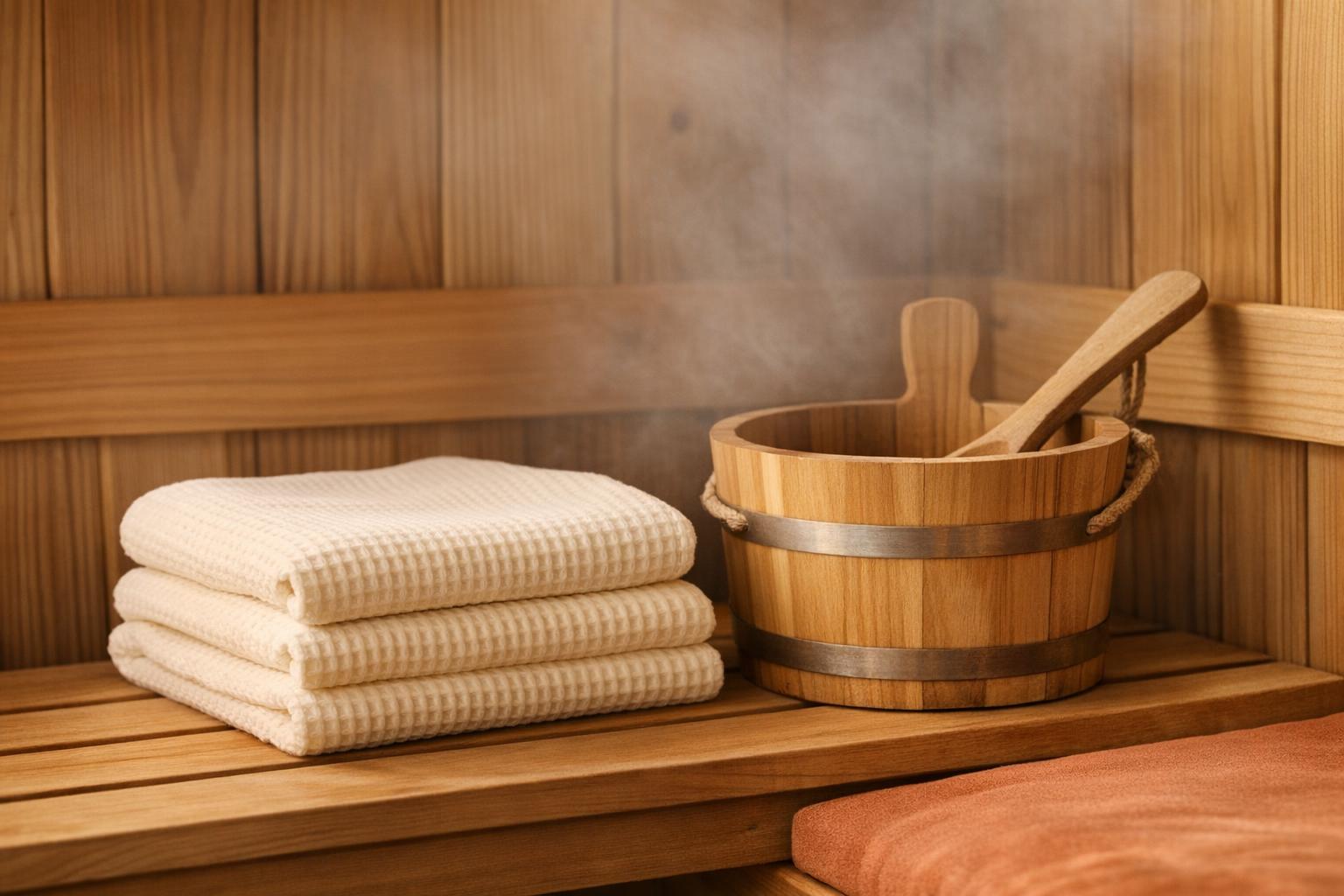
Bucket-and-ladle sets fall into the same category: they are traditional-sauna equipment, they photograph beautifully, and an infrared cabin has nothing to do with them. Replacement heating panels bought speculatively are another skip, since panels are warranty items and model-specific.
Sauna-branded cleaning products deserve their own mention. Most are unnecessary given that the correct cleaning method is a cloth and water, and a few are actively at odds with the manual instruction to keep treatments off unfinished wood. Read the maintenance guide before spending anything in this category.
The pattern is simple enough to apply yourself: an accessory is worth buying if it makes sitting more comfortable or keeps the cabin cleaner. Everything else is decoration, which is a legitimate reason to buy something but not one that belongs on a shortlist of necessities.