Home saunas need very little maintenance and tolerate very few mistakes. Almost all of the damage owners cause comes from two places: cleaning products that should never touch untreated wood, and moisture left to sit. A cloth, a routine and some restraint cover the rest.
Why untreated wood changes the rules
Cabin interiors are bare hemlock, cedar or spruce. There is no sealant, no varnish and no finish — the wood is deliberately left open, which is why it looks and smells the way it does. That also means it absorbs whatever you put on it, permanently.
Bleach, ammonia, pine cleaners, scented sprays and general-purpose kitchen cleaners all soak in and stay. The smell outlasts the cleaning, and in a small heated box that is an unpleasant thing to discover. Water and a cloth handle normal use; a very dilute mild soap handles the rest.
Check the manufacturer manual before using any product at all. Some sellers specify a cleaner and most specify what not to use.
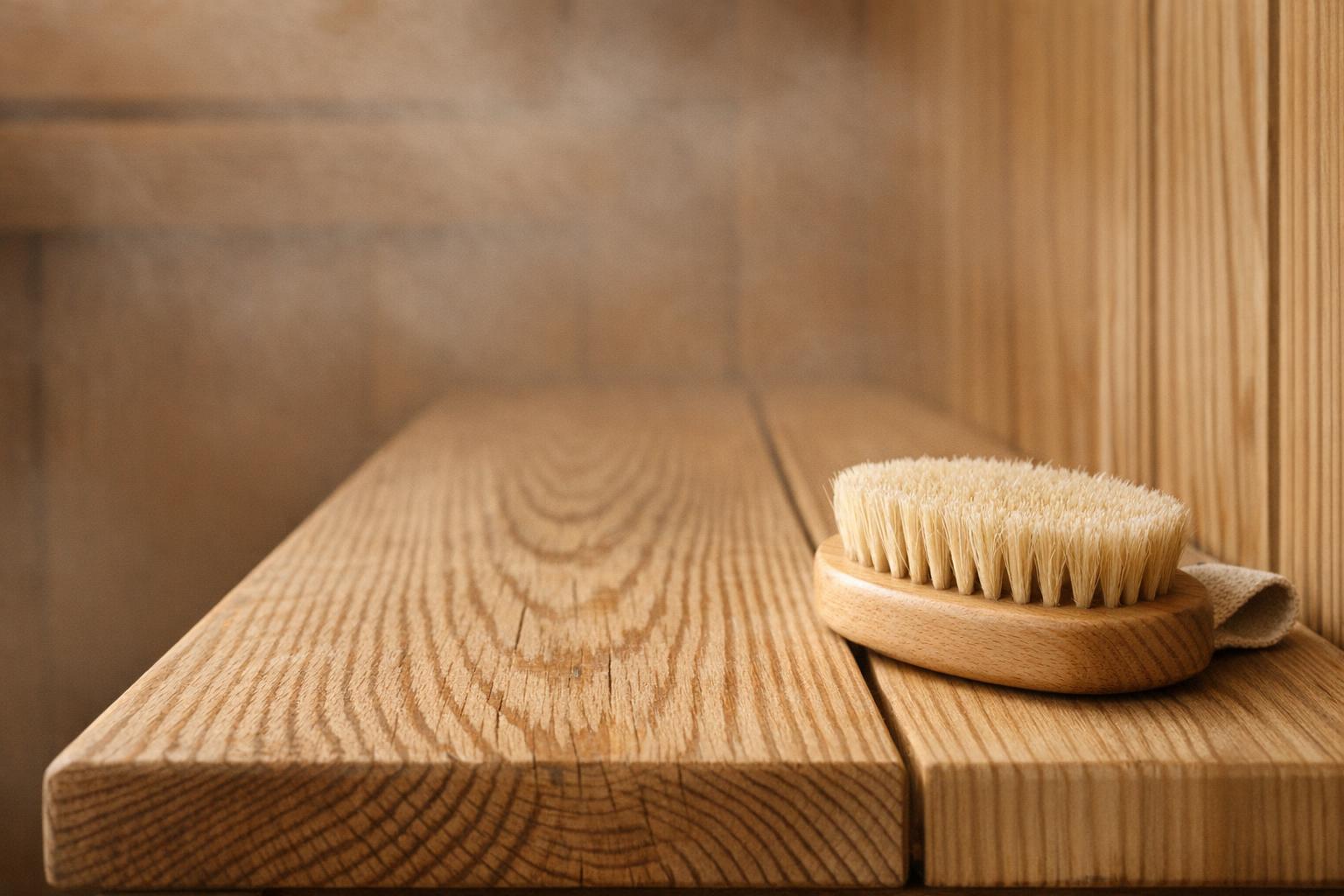
The routine that covers most of it
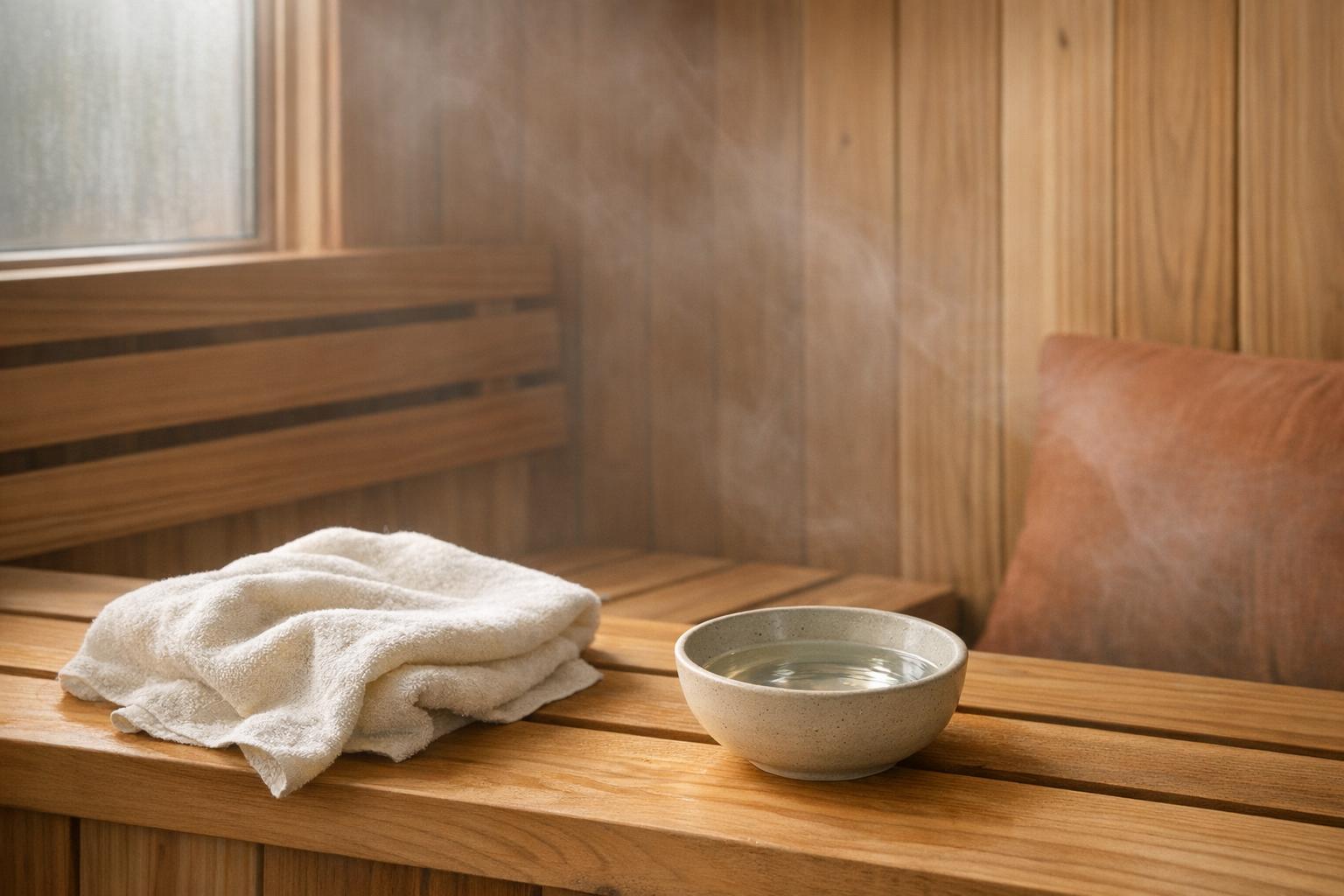
- After each session: wipe the bench and backrest with a dry or barely damp cloth. Leave the door open until the interior is dry to the touch.
- Weekly: wipe the floor and the bench with a lightly damp cloth, and take out whatever has accumulated under the bench.
- Monthly: vacuum the floor and the corners with a brush attachment, and check that the vents are clear.
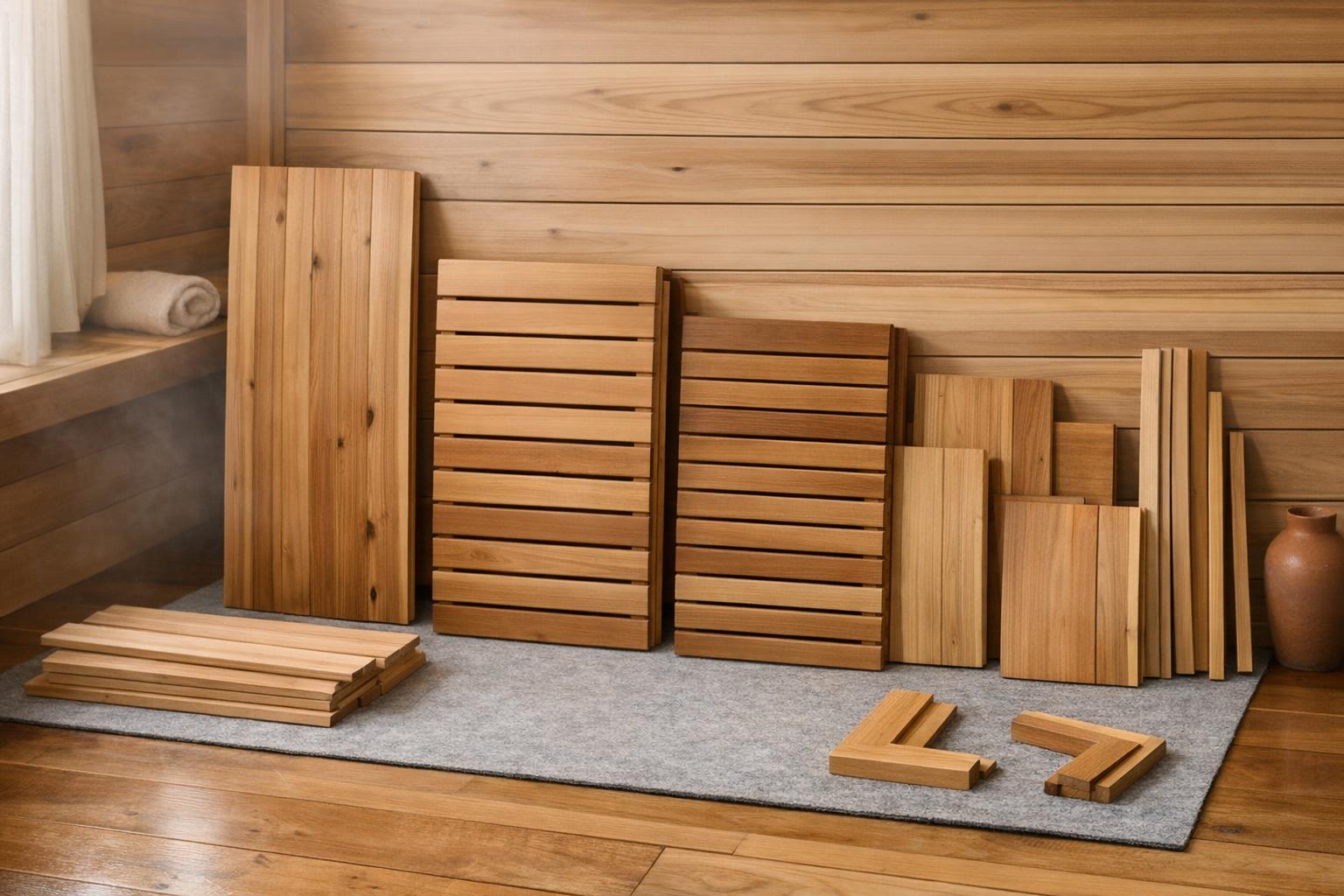
- Occasionally: light sanding of the bench with fine sandpaper lifts marks out of the wood. This is the intended repair for untreated timber and it works well.
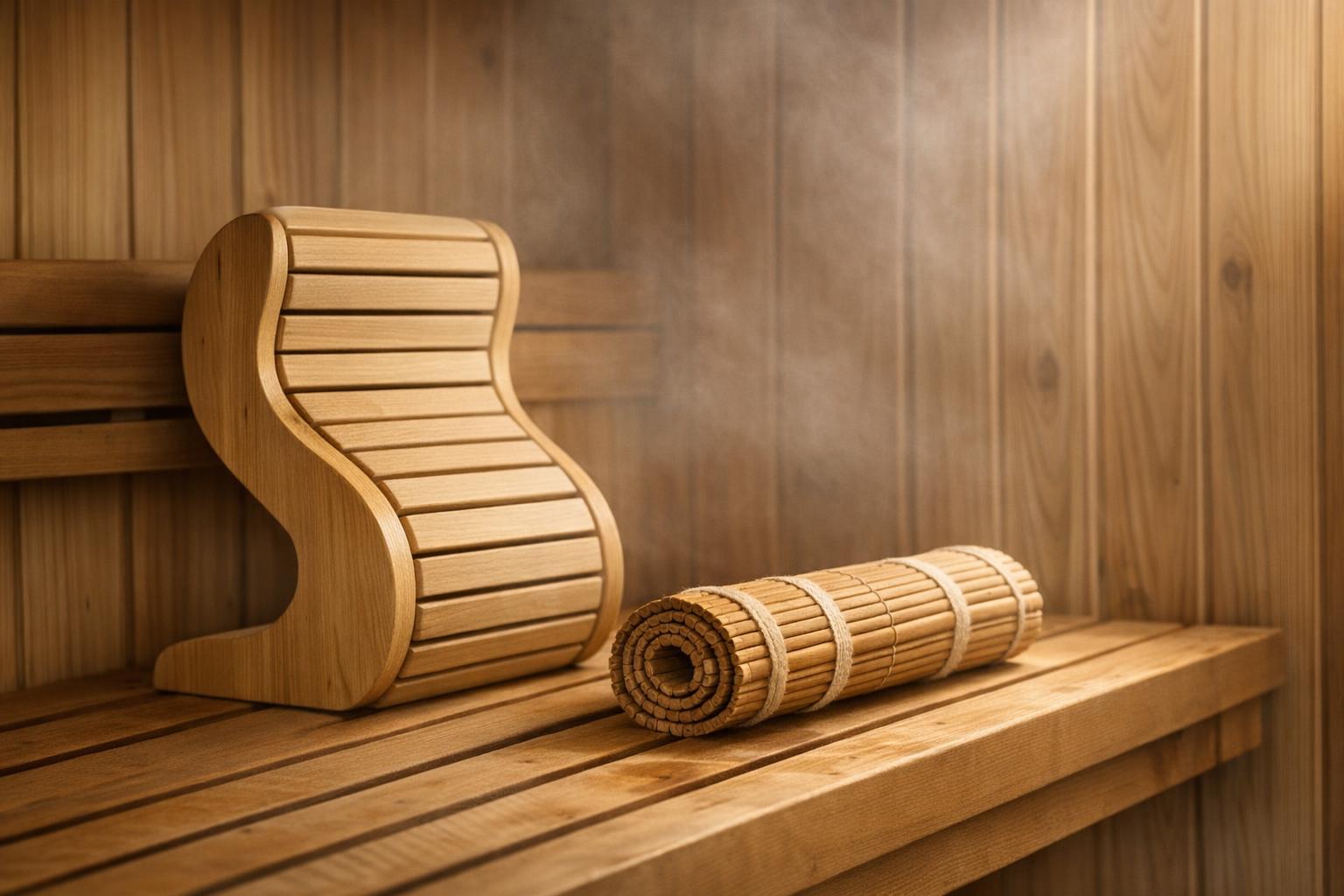
A towel on the bench does most of this work preventively — it is the single habit that keeps a bench looking new. The accessories collection includes bench covers and mats for the same reason.
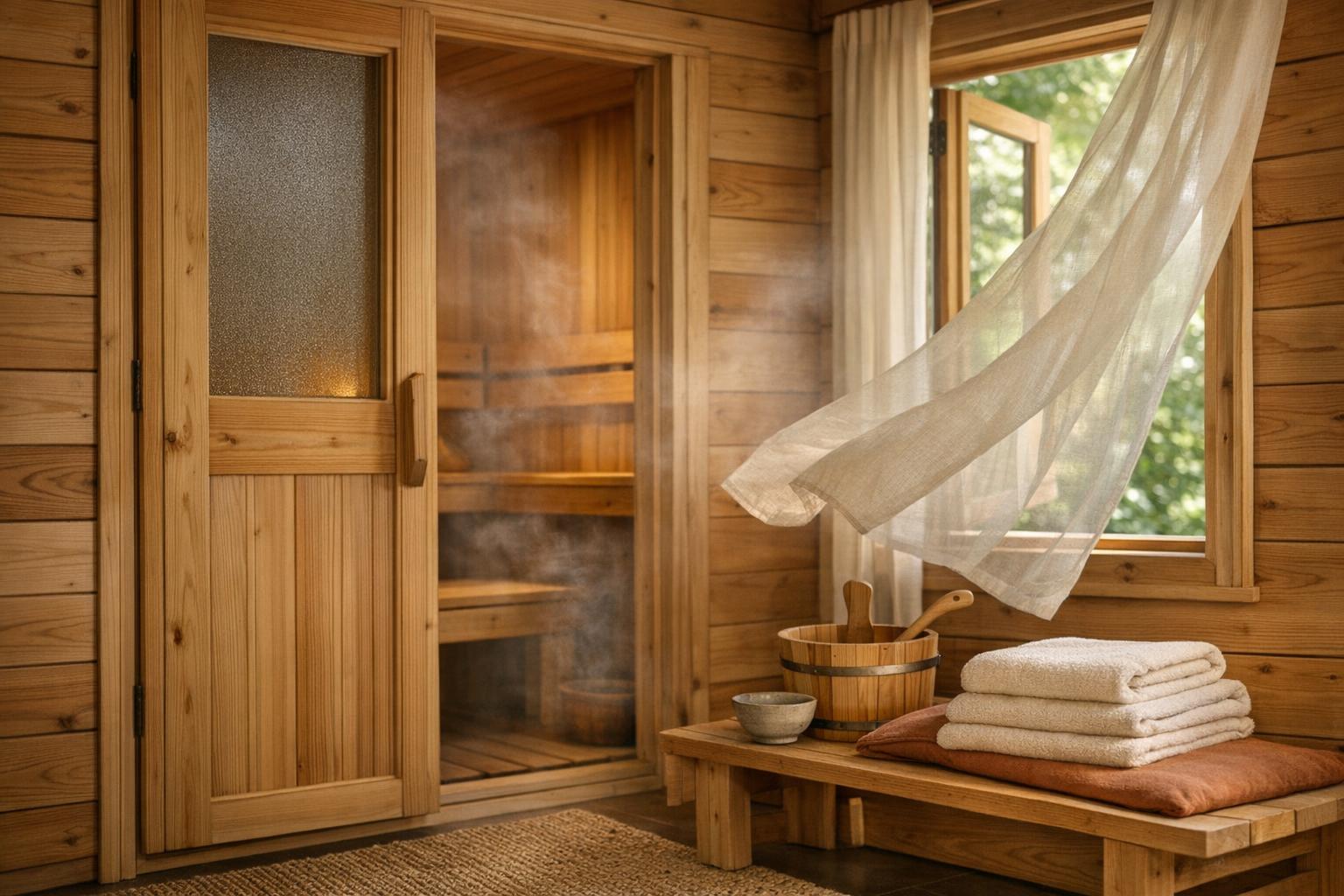
Fabric portables need the opposite discipline
A fabric cabin will not be damaged by a cleaner; it will be ruined by being packed damp. The interior lining holds moisture, the bag holds it in, and a closed bundle in a cupboard develops a smell that does not leave.
Wipe the interior lining with a damp cloth, leave the unit fully open until every surface is dry, and only then fold it. If you use it often, leave it up — the setup time is the trade you made when you bought fabric, but there is no rule that says it has to be packed between sessions.
Check the care instructions before washing any removable cover; most are wipe-clean only and machine washing destroys the reflective lining. If you are still deciding between the two builds, the cabin versus portable comparison covers how each one handles moisture over a season.
Long-term care and what actually fails
Wood cabins age well with almost no intervention. Colour deepens over the first year. The parts that eventually need attention are the mechanical ones: door hinges and catches that loosen, buckle clasps that back off slightly, and control panels that get sticky from being operated with wet hands.
Check the clasps once or twice a year and snug anything that has moved. Keep the glass door clean with a normal glass cleaner applied to the cloth rather than sprayed into the cabin, so nothing lands on the wood.
Heating panels are the component with the longest warranty and the fewest complaints; if one stops warming, that is a warranty call rather than a repair. Store the manual and the order details somewhere you will find them, and see the accessories guide for the small items that reduce wear in the first place.
A short list of what never to use
Most damage to a sauna interior arrives in a spray bottle. The list below is not exhaustive, but it covers what owners actually reach for and regret.
- Bleach and ammonia cleaners. Absorbed permanently by bare wood; the smell outlives the cleaning by years.
- Scented all-purpose sprays. Same problem, more pleasantly packaged.
- Oils and wood treatments. Cabin interiors are deliberately unfinished; oiling them is not maintenance, it is a modification the manual excludes.
- Abrasive pads. Fine sandpaper is the correct tool for a mark; a scouring pad leaves a shinier mark.
- Pressure washing or soaking. These are dry cabins. Water volume is not a cleaning method here.
Glass is the one exception worth naming, because the door is the part that visibly needs cleaning most often. A normal glass cleaner is fine there — sprayed onto the cloth, never into the cabin, so nothing drifts onto the wood beside it. The difference sounds pedantic and is the whole point.
When something genuinely needs more than a damp cloth — a spill, a stain, something sticky — check the manufacturer manual first, then use the mildest thing that works, applied to the cloth rather than to the wood. Sanding remains the fallback and it is a better one than any chemical.