Search for a home sauna and you get two product classes on the same results page, separated by roughly a factor of ten in price. Wood cabins are assembled furniture that stays where you put it. Fabric portables are a frame, a zip-up cover and a seat that fold into a bag. They are documented differently, they are owned differently, and confusing them is the most common mistake in this category.
What each one physically is
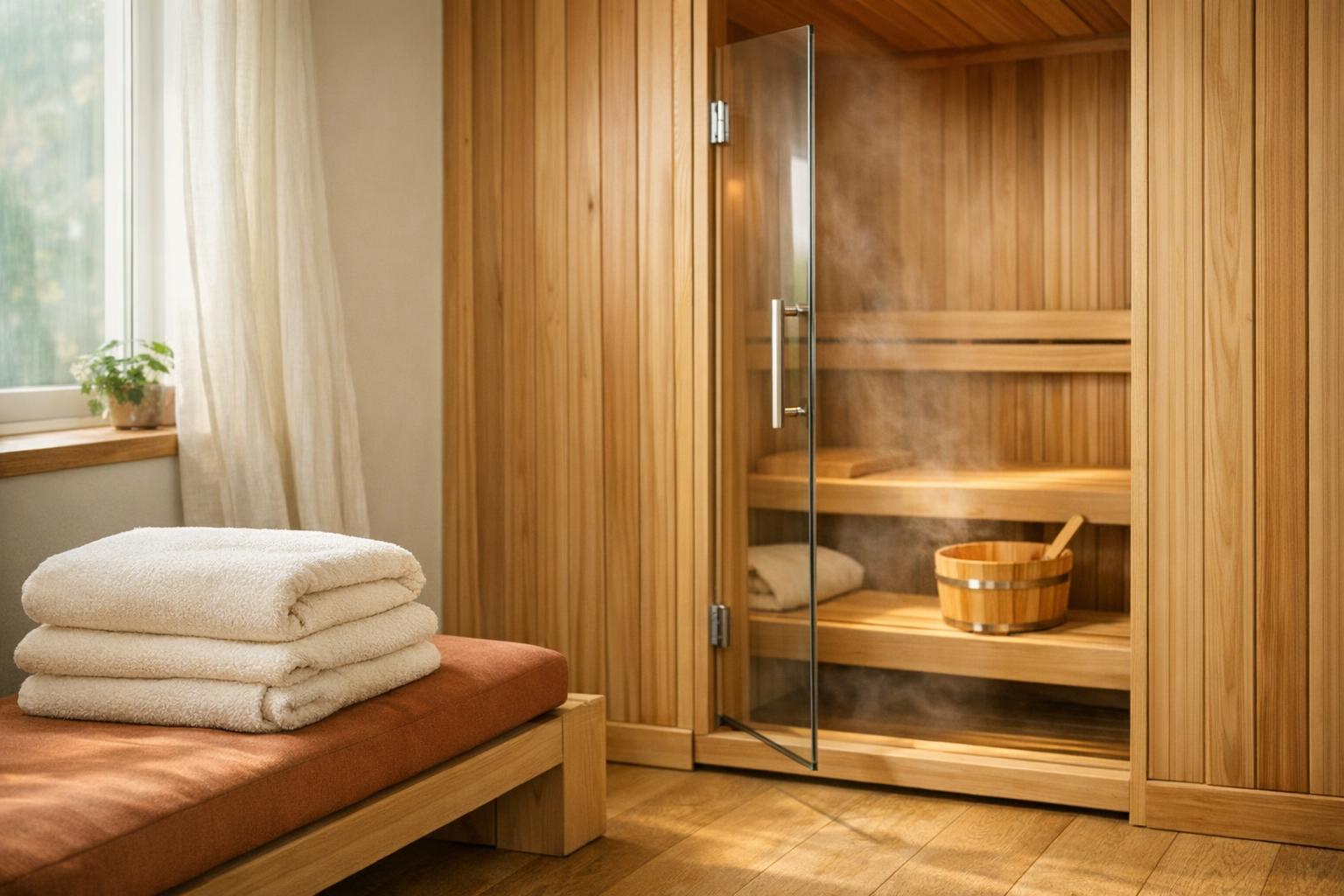
A wood cabin arrives as flat panels — walls, bench, roof, glass door — that buckle or clip together into a rigid box, typically hemlock or cedar, typically 70 to 77 inches tall. Assembly takes two people and a couple of hours. Once built it is furniture: moving it means partial disassembly.
A fabric portable is a collapsible frame with a reflective-lined cover, a fold-out chair and heating panels sewn into or clipped onto the fabric. Your head sits outside the zip collar in most designs. It packs into a carry bag in a few minutes and stores in a closet.
Price bands follow that difference closely: cabins generally run from about $1,000 to $2,500 in this catalog, fabric units from roughly $150 to $900.

Footprint, storage and who each suits
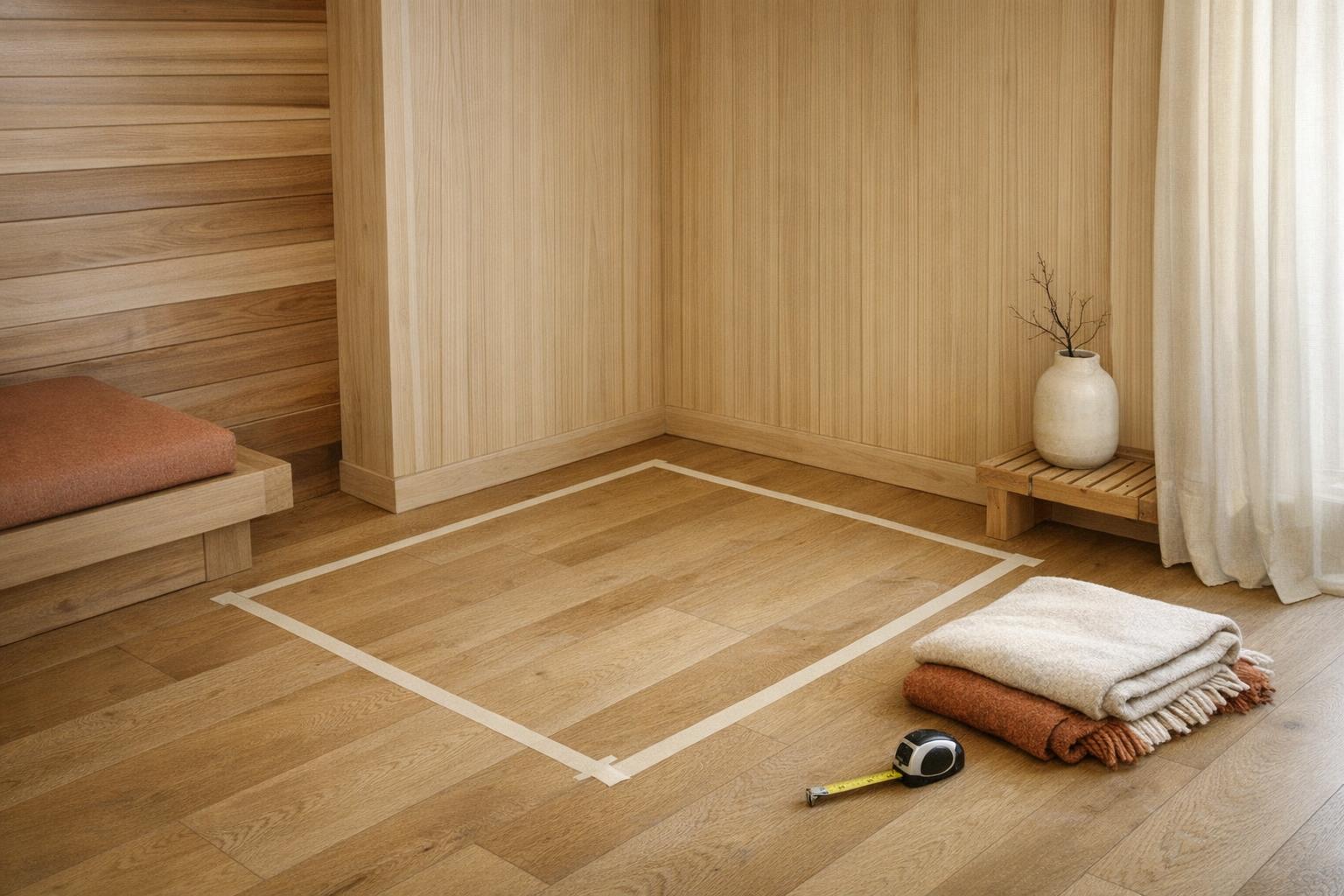
The cabin question is whether you can permanently surrender four square feet or more. The fabric question is whether you are willing to set up and pack down each time. Neither answer is better; they describe different households.
- Renters and small apartments — fabric, almost always. Nothing is permanent and nothing needs a dedicated corner.
- Dedicated basement, garage or spare room — a cabin earns its space and is far more pleasant to sit in.
- Shared households — cabins in the two- and three-person bands are built for more than one seat; most fabric units are strictly single-occupant.
- Frequent movers — fabric packs into a car; a cabin is a disassembly project every time.
The side-by-side comparison puts top-documented examples of both classes on one page so the documentation gap is visible rather than described.

How the listings differ in what they document
Cabin listings are specification-rich: person capacity, wood species, panel type, glass thickness, assembled dimensions, voltage and amperage. Fabric listings are usually thinner, often stating open dimensions and a wattage figure but nothing about materials beyond a trade name for the cover.
That gap shows up directly in our ratings. A listing that states person capacity earns a documented spec-fit score; one that does not is scored on documentation completeness instead and labelled as such. Fabric units land in the second group more often than cabins do, which is a statement about their listings, not about the products.
Neither score says anything about how a unit feels to sit in. We have not sat in any of them, and the methodology says so on the page.
Power, assembly and upkeep
Most fabric portables state a standard 120V household plug and a wattage in the hundreds. Cabins vary widely: smaller ones plug into a normal outlet, larger ones state a dedicated 20-amp circuit or 240V. Anything beyond plugging into an existing standard household outlet — a new circuit, a new receptacle, any change to your wiring — belongs to a licensed electrician. We publish what the listing states and stop there.
Upkeep differs just as much. Wood interiors get wiped with a cloth and nothing harsh — see the maintenance guide. Fabric covers are wiped down and, critically, must be fully dry before they go back in the bag; a damp folded cover is how these units acquire a permanent smell.
Assembly is the other asymmetry: a cabin is a one-time two-person job covered in our assembly guide, while a fabric unit is a two-minute job you repeat forever.
Choosing between them
Answer one question honestly: will you set this thing up every single time? If the answer is yes without resentment, fabric saves you a thousand dollars and a corner of your home. If the answer is "probably not after week three", buy the cabin or buy nothing, because an unused folded sauna in a closet is the most expensive option of all.
The second question is about other people. If anyone else in the household intends to use it, a fabric unit that one person sets up and packs down becomes that person’s chore, and chores end. Cabins are neutral: they are simply there, and anyone can switch one on without negotiating.
Budget sits third, not first, which is unusual advice in a category with a tenfold price spread. The reason is that both options are cheap compared to a purchase that gets used twice — a $200 fabric unit in a bag and a $2,000 cabin nobody has room for fail in exactly the same way.
Once you have chosen a class, the main buying guide covers the rest of the decision, and the full catalog lets you filter by category directly.